
Troubleshooting
Common Sub-Zero Problems & Fixes
The faults we see most in Oakland kitchens — what causes them, what you can safely check, and when to call a technician.
- Open 24/7
- Same-day service
- 365-day warranty
- Genuine OEM parts
 By Marcus Reed · Lead Sub-Zero Technician · 20+ yrs · Oakland & East Bay
 Most Sub-Zero problems trace to a handful of causes: a dust-clogged condenser, a worn fan or gasket, a defrost fault, an ice-maker fill issue, or a clogged drain. Many start with a safe owner check; the rest need a technician. Pick your symptom below — we fix all of them across Oakland & the East Bay, 24/7. Call (650) 668-1554.
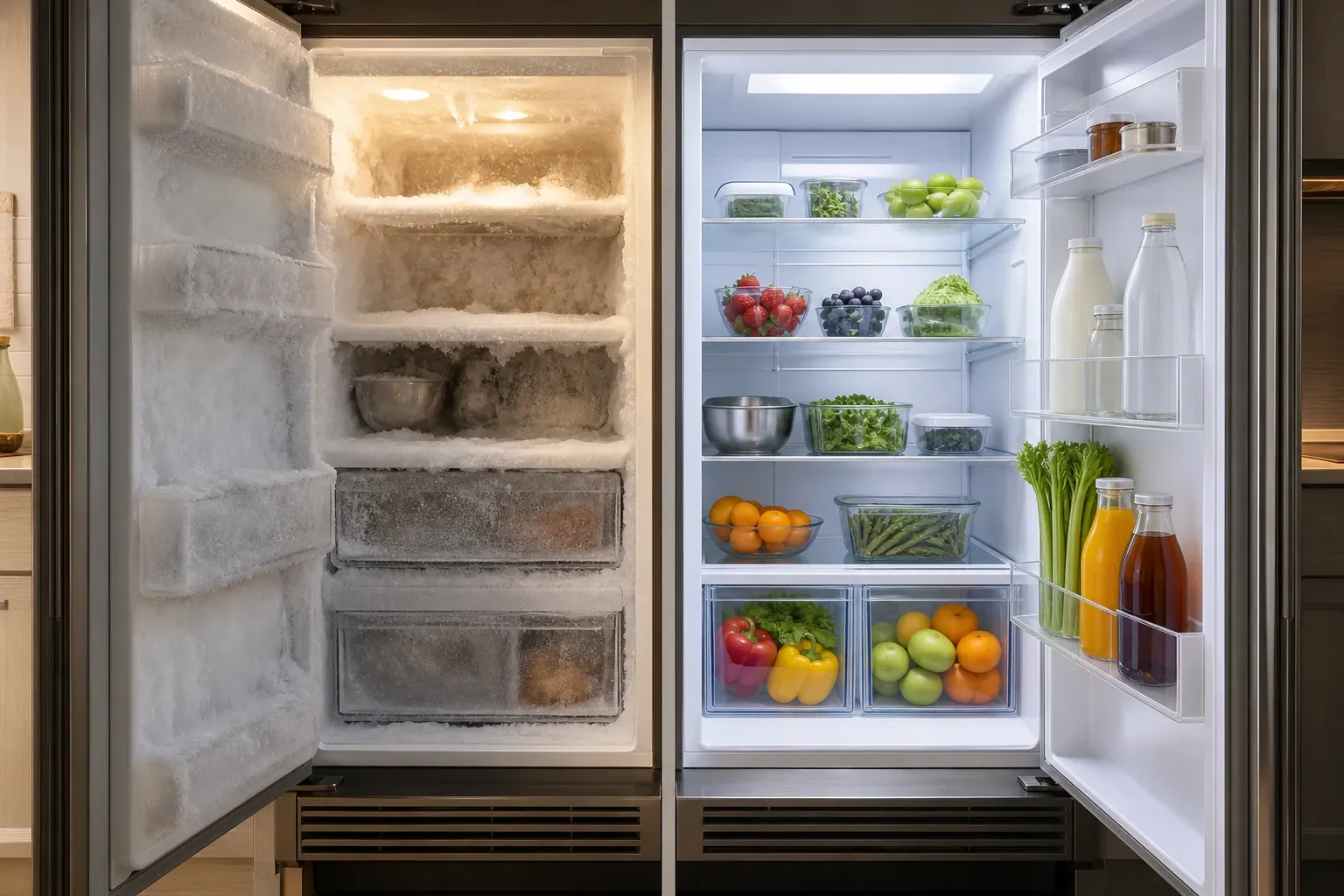
Sub-Zero refrigeration
Sub-Zero fridge, freezer & ice symptoms
Sub-Zero Not Cooling
If your Sub-Zero isn't cooling in Oakland, the usual causes are a dust-clogged condenser, a stuck air damper, a failing…
Sub-Zero Ice Maker Not Working
A Sub-Zero ice maker that stopped making ice in Oakland is usually a water-supply problem (closed/kinked valve, frozen…
Sub-Zero Freezer Not Freezing
A Sub-Zero freezer running warm in Oakland usually means a dirty condenser, a failing evaporator fan, a defrost-system…
Sub-Zero Leaking Water
Water pooling under a Sub-Zero in Oakland is most often a frozen or clogged defrost drain backing up — not a true leak.…
Sub-Zero Loud or Noisy
A noisy Sub-Zero in Oakland is usually a failing evaporator or condenser fan motor, ice buildup hitting a fan, or a…
How to Reset a Sub-Zero Control Panel
To reset a Sub-Zero control panel, you can usually clear an alert from the touch display or briefly cut power at the…
Wolf cooking
Wolf range & oven symptoms
A field guide to Sub-Zero faults in Oakland kitchens
Sub-Zero refrigeration is built to outlast almost everything else in the kitchen, which is exactly why a sudden symptom feels alarming. The good news is that the overwhelming majority of calls we run across Oakland and the East Bay come back to the same short list of root causes. Knowing which bucket your symptom falls into tells you whether it's a five-minute owner fix or a job for a technician — and it stops you from spending money on a part that was never the problem.
The handful of root causes behind most failures
Across hundreds of built-in, column and PRO units, nearly everything we diagnose traces back to one of these:
- A dust-clogged condenser. When the coils behind the lower grille pack with dust and pet hair, the compressor can't reject heat. The result is weak cooling, long run times, a warm fridge or freezer, and loud running — often all at once.
- A worn fan motor. The evaporator fan moves cold air through the cabinet and the condenser fan cools the compressor. As either wears, you get warm spots, frost, buzzing, or whining.
- A defrost-system fault. A failed defrost heater, thermostat or sensor lets frost build over the evaporator coil until airflow chokes off and the section warms.
- A tired door gasket. Once the magnetic seal hardens or tears, warm humid air sneaks in — driving condensation, ice, and a compressor that never rests.
- An ice-maker fill issue. A closed valve, a kinked or frozen fill tube, low water pressure, or a failed inlet valve stops ice before the module is ever to blame.
- A clogged defrost drain. When the drain ices over, melt-water backs up and pools under the unit — looking like a leak that isn't.
- The sealed system. Compressor or refrigerant faults are the least common but the most serious; we confirm these with gauges and electrical readings before recommending anything.
Safe checks any owner can do
Before you call, a few minutes of checking can rule out the simple stuff — or confirm you have a real fault. All of these are safe with no tools beyond a vacuum:
- Vacuum and brush the condenser coils behind the lower grille. This alone resolves a surprising share of cooling and noise complaints.
- Confirm both doors close fully and the gaskets meet the cabinet all the way around — a stray container or a curled seal is enough to warm a section.
- Make sure the unit has breathing room. Built-ins need their grille clearance; furniture or a slid-back fridge traps heat.
- Check that the ice-maker water shutoff is open and the line isn't kinked.
- For a nuisance alert, try a power-cycle: switch the unit off (or the breaker for about 60 seconds), then restore it. If the code returns, it's real.
When to stop and call a technician
Some symptoms are a signal to put the screwdriver down. Call us if neither side cools at all, if a fault code comes back after a reset, if the unit runs loudly without stopping, if you see frost rebuilding within a day of clearing it, or if you suspect anything in the sealed system. Those involve refrigerant, electrical components or the control board, and guessing at parts gets expensive fast. We diagnose the exact cause, prove sealed-system faults with instruments, and quote a clear price before any work — call (650) 668-1554 any time.
What's actually happening, symptom by symptom
Not cooling at all
If the lights and controls work but nothing is cold, power to the cabinet is fine, so it's a cooling-system fault — not your wiring. On the milder end it's a dust-choked condenser or a stuck air damper; on the serious end, a control, compressor or sealed-system problem. We never recommend sealed-system work without gauge and electrical evidence. Walk through the likely causes on Sub-Zero not cooling, or go straight to Sub-Zero refrigerator repair.
Freezer running warm
A Sub-Zero freezer that's softening ice cream usually has a dirty condenser, a failing evaporator fan, a defrost fault, or a gasket letting warm air in. Because frozen food is on the clock, this is the symptom we treat most urgently. If it's actively warming, move food and call right away; details and next steps are on Sub-Zero freezer not freezing and freezer repair.
Ice maker stopped working
No ice almost always starts at the water supply, not the module: a closed saddle valve, a kinked line, low household pressure, or a frozen fill tube. If supply checks out, the inlet valve or ice-maker module is next. We confirm the fill and harvest cycle before quoting so you don't pay for the wrong part — see ice maker not working.
Water pooling underneath
Water on the floor reads like a leak, but on a Sub-Zero it's most often a frozen or clogged defrost drain backing up. Other sources are the water line, the inlet valve, or condensation from a worn gasket. We clear and test the drain, or pinpoint the real source instead of guessing — start at Sub-Zero leaking water.
Loud or noisy operation
Buzzing and whirring usually trace to a wearing fan motor or frost contacting a fan blade; constant loud running often points back to a dirty condenser making the compressor labor. Persistent loud running can also signal sealed-system strain. We locate the source and quote before touching anything — more on loud or noisy Sub-Zero.
Alerts and resets
A SERVICE light or fault code isn't always a disaster — sometimes it's a nuisance alert. A reset clears the display, but if the board re-logs the code the fault is real. Read the code in service mode, look it up in our error-code guide, and if it returns, see how to reset the control panel for what to do next.
Model-specific notes
Different Sub-Zero families fail in their own ways. Dual-evaporator Built-In (BI) units can run a warm fridge while the freezer stays cold, because the fresh-food side has its own evaporator, fan and damper. Classic 600 and 700-series built-ins are workhorses where most issues are a single component, not the sealed system. Integrated columns (separate refrigerator and freezer towers) concentrate everything into a tall, tightly packed chassis, so airflow and defrost faults show up clearly. PRO 48 and PRO 36 units, with their dual compressors and glass doors, run harder and reward regular condenser cleaning. Under-counter and wine units have their own thermal quirks — for those, see wine cooler repair. On the cooking side, Wolf ranges and ovens bring a separate set of igniter, spark-module and control-board faults. Have your model and serial ready when you call so we bring the right parts.
What to expect on a visit
A typical diagnosis runs about 30 to 60 minutes. The technician confirms the symptom, checks the condenser and airflow, tests fans, dampers, sensors and the defrost circuit, reads any stored codes in service mode, and — only when the evidence points there — puts gauges on the sealed system. You get a plain-language explanation of the cause and a fixed price before any repair. We stock the common fridge and freezer parts (fans, dampers, thermistors, gaskets, relays) on the van and order model-specific components quickly, so many jobs finish the same day.
Repair or replace? An honest answer
Most of the time, repair wins. A built-in Sub-Zero is engineered for two decades or more, and the typical failure is one part — a fan, a board, a defrost component — that costs a fraction of replacement, especially once you factor in the custom cabinetry a built-in sits in. The exception is a failed compressor or a sealed-system leak on a very old unit: there, we'll lay out the cost honestly and tell you when replacement is the smarter money. We'd rather give you a straight assessment than sell a repair that doesn't make sense. Typical price ranges are on our Sub-Zero repair cost page.
Maintenance that prevents most of these calls
Oakland's environment is hard on refrigeration in specific ways. Homes in the hills and on wooded lots in Montclair and Claremont pull fine dust into condenser coils. Hard water across the East Bay scales up ice-maker valves and fill tubes. Converted loft kitchens around Jack London Square and downtown trap humidity that feeds frost and condensation. A short routine handles most of it: vacuum the condenser every three to four months, wipe and inspect door gaskets so they keep sealing, give built-ins their grille clearance, and flush or replace the water filter on schedule. Our Sub-Zero maintenance guide walks through the full routine.
Service, parts and warranty
We're independent Sub-Zero, Wolf and Viking specialists — not a manufacturer-authorized service center. For out-of-warranty units that usually means faster scheduling, genuine OEM parts, and transparent pricing, with work that follows manufacturer service specifications. Every repair carries a 365-day warranty on parts and labor. If your unit is still under factory warranty, use an authorized center to keep that coverage intact. Otherwise, whatever your symptom, we cover Oakland and the East Bay 24/7 — call (650) 668-1554.
FAQ
Common Sub-Zero problems — FAQ
What is the single most common Sub-Zero problem in Oakland?
A dust-clogged condenser is by far the most common — and the most preventable. It drives weak cooling, long run times, a warm fridge or freezer, and loud running all at once, because the compressor can't shed heat. East Bay homes near the hills, on wooded lots, or with pets clog faster. Vacuuming the coils behind the lower grille every few months is the highest-value thing an owner can do.
Which Sub-Zero checks are safe for me to do myself?
Safe owner checks: vacuum and brush the condenser coils behind the lower grille, confirm the doors close fully and the gaskets seal, make sure the unit isn't jammed against a wall or cabinet (built-ins need clearance to breathe), verify the ice maker's water shutoff is open, and clear visible debris from a defrost drain you can reach. Anything involving the sealed system, refrigerant, the compressor, electrical components or the control board needs a technician.
How do I know whether it's a quick fix or a serious repair?
Quick fixes tend to be a dirty condenser, a worn gasket, a clogged drain, a closed water valve, or a nuisance alert that clears on a power-cycle. Serious repairs involve the evaporator or condenser fan, the defrost system, the control board, or the sealed system (compressor and refrigerant). If neither side cools at all, if a fault code returns after a reset, or if the unit runs loudly nonstop, treat it as a real fault and book a diagnosis rather than guessing at parts.
My Sub-Zero shows a fault code — what should I do?
Note the exact code before you do anything, then look it up in our Sub-Zero error-code guide. Some codes (like a long-fill ice-maker alert) point to a simple water-supply issue; others flag excessive run time or a sealed-system concern. A reset clears the displayed alert, but if the board re-logs the same code the underlying fault is still present and needs diagnosis.
Is a warm Sub-Zero freezer an emergency?
If the freezer is actively losing temperature and food is at risk, yes — call our 24/7 Oakland line right away and move perishables to buy time. If it's holding but reading a few degrees warm, schedule promptly before it drifts further. Either way, don't keep opening the door, which only adds warm, humid air.
Why does my Sub-Zero ice up or frost over repeatedly?
Recurring frost usually means the defrost system isn't completing its cycle — a failed defrost heater, defrost thermostat or sensor, or a control fault — or a clogged drain that lets melt-water refreeze. Oakland's damp coastal air and humid loft kitchens make frost problems show up sooner. We restore the defrost cycle and clear the drain so it stops coming back, rather than just scraping the ice.
Is it worth repairing an older built-in Sub-Zero?
Usually yes. Built-in (BI), 600/700-series and column units are engineered for 20-plus years, and most failures are a single component — a fan, damper, gasket, defrost part or board — not the sealed system. We give an honest repair-vs-replace assessment on big-ticket jobs like a compressor; for most faults, repairing a built-in is far cheaper than a multi-thousand-dollar replacement plus cabinetry rework.
Do you fix Wolf and Viking too, or only Sub-Zero?
Both. We're independent Sub-Zero, Wolf and Viking specialists across Oakland and the East Bay. Wolf ranges, dual-fuel and built-in ovens have their own common faults (igniters, spark modules, control boards, error codes); see our Wolf repair and Wolf error-code pages. Tell us the brand and model when you call so we arrive with the right parts.
What does a diagnostic visit cost, and is it warrantied?
The diagnostic starts at $89 and is applied to your repair if you go ahead. You approve a clear price before any work begins, we use genuine OEM parts, and every repair carries a 365-day warranty on parts and labor. There are no surprise charges and no booking fees — booking is handled directly through our team.
Explore more
Related help & services
Sub-Zero acting up in Oakland?
Tell us your model and the symptom — we'll give you a clear price and book a same-day visit when the schedule allows.