
“Garage Sub-Zero freezer in the hills quit in a heat wave. They came out the same evening, found the condenser caked with dust plus a tired fan, and saved a freezer full of food. Worth every penny.”
Eric L.Oakland Hills · Sub-Zero · freezer
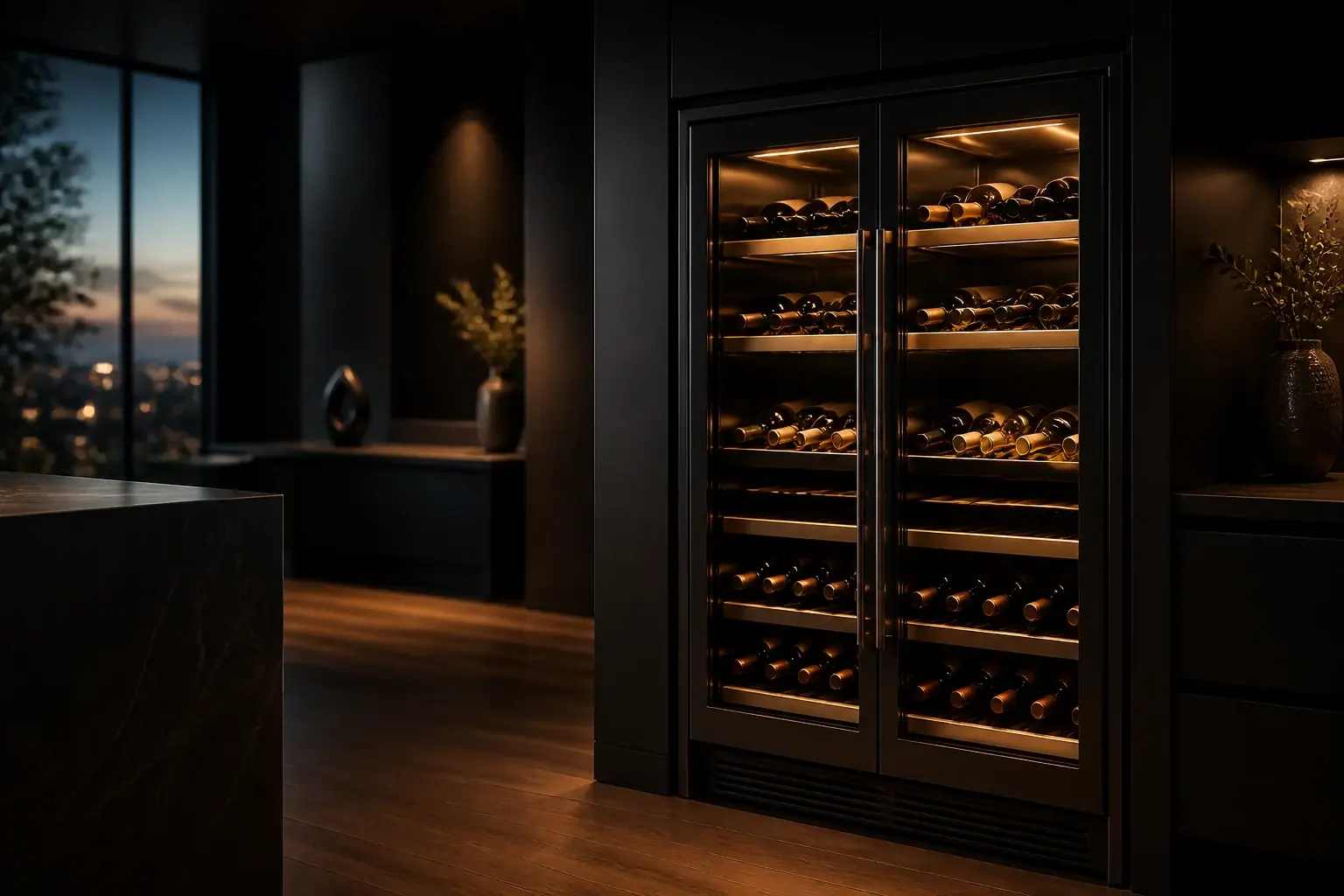
Sub-Zero Wine Cooler Repair
Built-in and undercounter Sub-Zero wine units — warm zones, humidity drift, noisy fans and failed compressors. Same-day across the East Bay, 24/7, warrantied.
 By Ray Okafor · Cooking & Wine Specialist · 12+ yrs · Oakland & East Bay
 Sub-Zero wine cooler running warm in Oakland? The usual causes are a failed thermistor, a stuck damper, a stopped evaporator or condenser fan, a worn door seal, or — less often — a sealed-system or compressor fault. Because a slow temperature drift can quietly harm a collection, we treat wine units as a priority. We repair built-in and undercounter Sub-Zero wine storage same-day across Oakland & the East Bay — call (650) 668-1554.
Most Sub-Zero wine units run two independent zones so reds and whites can hold different set points. Each zone has its own thermistor and air path, so when one compartment drifts warm while the other stays accurate, the fault is almost always local — a failed sensor sending a bad reading, a stuck or iced damper, or a fan that's no longer pushing cold air into that zone. We test each zone on its own and read the control board's reported temperatures against an independent probe, so we replace only the part that's actually off and leave the working zone untouched.
A common pattern on dual-zone built-ins is a lower zone that holds red-wine temperature perfectly while the upper zone slowly creeps up over a few days. That points us straight at the upper damper or its thermistor rather than at the compressor, and it keeps the repair small. The opposite pattern — both zones drifting together and the compressor running nonstop — is the signal to look at airflow at the condenser, the defrost circuit, or the sealed system. Reading the symptom correctly before opening anything is what keeps a wine-cooler visit from turning into guesswork.
Sub-Zero engineered these cabinets to hold humidity in a range that keeps corks supple, so a humidity problem is a real wine-storage concern, not a cosmetic one. Sweating glass, condensation pooling on the shelves, or a musty smell signals humidity that's too high — typically a tired door gasket letting warm room air in, a blocked condensate drain, or a frosting evaporator. Brittle, receding corks suggest air that's too dry, often from excessive defrost cycling or a sealing fault. We trace the actual source and restore the unit's intended humidity balance.
Oakland's setting makes this worth watching. Homes up in the hills and around Montclair and Claremont swing cooler and damper with the marine layer, while flatland and waterfront lofts near Jack London Square run warmer and dustier. A gasket that seals fine in a stable interior can still struggle when a kitchen routinely opens to outdoor air, so we check the door's compression along its whole length, not just at the latch, and confirm the drain path is clear before blaming the sealed system.
If the cabinet can't reach or hold temperature even though it's powered and running, suspect airflow or the sealed system. A failed evaporator fan stops cold air from circulating, so the coil frosts and the zone warms; a failed condenser fan lets the compressor overheat and short-cycle. True compressor and refrigerant faults are less common but more serious, and they need electrical and pressure evidence before any quote. We confirm sealed-system problems with gauges and instruments, then give an honest repair-vs-replace call instead of selling a compressor on a hunch.
Condenser airflow deserves a special mention in the East Bay. The fine dust that settles in hillside homes and the lint that drifts in open loft kitchens both pack into the condenser coil over time, and a clogged coil makes the compressor work harder and run hotter for the same cooling. We often find that what looks like an early compressor failure is really a starved condenser — cleared and tested, the unit holds temperature again. That's exactly the kind of fault routine Sub-Zero maintenance and tune-up service is meant to catch before it strands a collection.
We service the full spread of Sub-Zero wine storage you'll find across Oakland and the East Bay. That includes the built-in dual-zone units in the BI- and 424 lines, the 24-inch and 30-inch integrated wine columns in the IW series, the classic 427 and 430 wine-storage cabinets, 315-series undercounter wine units, and the slimmer wine drawers built into island and bar runs. Newer Designer wine columns and the older flush-inset built-ins differ in their thermistor placement, damper design and board layout, so model and serial matter: tell us yours when you call and we arrive with the right sensors, fans, dampers and gaskets rather than making a second trip for parts.
Built-in dual-zone cabinets pack two climates into one carcass, which means two thermistors, often two dampers, and a shared sealed system — so a single failed sensor can throw one zone while everything else is healthy. Full-height integrated wine columns trade that for a single tall climate with deep racking, where airflow from top to bottom and a clean, even door seal do most of the work. Knowing which design is in your kitchen changes where we look first, and it's why we don't treat every "warm wine fridge" the same way.
A wine cooler should be nearly silent in a living space, so new noise is worth diagnosing early. A persistent buzz or hum usually traces to a worn evaporator or condenser fan motor; a rattle is often a loose wine rack, a shelf out of its track, or a compressor mount that has aged and started transmitting vibration into the cabinet and cabinetry around it. We isolate the source by zone and component so the repair makes the unit quiet again rather than masking the sound.
Vibration also matters for the wine itself. Constant low-level shaking is bad for long-term storage, and in built-in installations a humming compressor mount can telegraph straight through shared cabinetry into the rest of the kitchen. We check the mounts, the fan bearings and the rack seating together, then verify the cabinet runs quietly with the door closed and a full load in place.
The interior lighting and the door gasket do more than look good on a built-in wine column. A failed LED module or driver leaves you opening the door longer to find a bottle, which stresses the temperature; a worn, hardened or torn door seal lets conditioned air escape and warm, humid room air in, which drives both temperature drift and humidity problems. We replace failed lighting and re-seat or renew door gaskets with genuine OEM parts so the cabinet holds its environment with the door closed.
A visit starts with the symptoms you've seen and the unit's own data: we read the set points and the board's reported temperatures, then compare them against an independent probe placed in the cabinet. From there we check the obvious environmental factors — door seal compression, condenser airflow, drain path — before opening the sealed circuit. You get a clear diagnosis and a written price before any work begins, and that diagnostic fee is applied to the repair if you go ahead.
Most common wine-unit faults — a thermistor, a fan, a damper, a gasket — are fixed in a single visit because we stock those parts on the van. Model-specific control boards are ordered against your serial number and scheduled for a quick return trip. Every repair is backed by our 365-day warranty on parts and labor, and we'll always tell you when leaving a unit alone, or a small adjustment, is the right call rather than a paid repair. For a fuller breakdown of typical figures, see our Sub-Zero repair cost guide for Oakland.
Wine units reward a little routine care. Vacuum or brush the condenser area a couple of times a year — more often in dusty hillside homes — so the compressor isn't fighting a clogged coil. Wipe the door gasket and check that it still grips evenly all the way around; a gasket that has gone hard or shiny is the start of both temperature drift and humidity trouble. Keep the cabinet reasonably full but not jammed, so air can move around the bottles, and avoid parking the unit where afternoon sun or a nearby oven loads it with extra heat. If the display ever reads right but the wine feels off, trust the wine and have the sensors checked.
A wine unit that reads the right number on the display but actually runs several degrees off is one of the quietest ways to damage a cellar over months. We verify true cabinet temperature against the control board's reading, recalibrate or replace drifting sensors, and confirm the unit recovers properly after the door is opened. If you're investing in storage, regular care matters too — see our Sub-Zero maintenance and tune-up service. Many homes pair a wine unit with a built-in fridge; we also handle Sub-Zero refrigerator repair in Oakland and Sub-Zero freezer repair across the East Bay.
A well-maintained Sub-Zero wine unit commonly lasts 15 to 20 years, so age is the first thing we weigh. If your cabinet is under roughly a dozen years old, a sensor, fan, damper, gasket or board repair is almost always the right move next to the real cost of a built-in replacement plus the cabinetry rework an integrated column usually demands. When a much older unit needs a full sealed-system rebuild, the math can tip the other way, and we'll tell you plainly. Our aim is the call that's right for your collection and your budget, not the largest invoice — that's the point of being independent.
We're an independent Sub-Zero specialist — not a manufacturer-authorized service center. For out-of-warranty wine units that usually means faster scheduling, genuine OEM parts, and transparent pricing, with work that follows manufacturer service specifications. If your wine cooler is still under factory warranty, use an authorized center to keep that coverage intact.
We repair Sub-Zero wine storage throughout Oakland and the surrounding East Bay — from the hill neighborhoods of Montclair, Claremont, Rockridge and Piedmont to the flatlands, Lake Merritt, Temescal, and the loft kitchens around Jack London Square, plus Berkeley, Alameda, Emeryville and San Leandro. We know how local conditions — hill dust, hard water on the ice and humidity side, and warm, open-plan loft layouts — show up in real wine-cooler faults, and we plan diagnostics around them. When a zone goes warm, call (650) 668-1554 and we'll get a specialist out the same day where a slot is open.
Reviews
“Garage Sub-Zero freezer in the hills quit in a heat wave. They came out the same evening, found the condenser caked with dust plus a tired fan, and saved a freezer full of food. Worth every penny.”
Eric L.Oakland Hills · Sub-Zero · freezer
“Sub-Zero ice maker stopped producing. Quick diagnosis of the fill valve and module, replaced both, and showed me how to confirm it was cycling before they left. Easy to reach on the 24/7 line.”
Will P.Oakland · Sub-Zero · ice maker
“Viking fridge wasn't holding temp. Honest assessment — they told me which part was worth replacing and which wasn't, instead of upselling. Came back promptly with the part and it's been fine since.”
Tomás V.Oakland · Viking · refrigerator
“Estate kitchen near Claremont with a panel-ready Sub-Zero that iced up repeatedly. They fixed the defrost system and walked me through condenser cleaning so it won't keep happening. Respectful of the house, clear pricing up front.”
Karen S.Claremont · Sub-Zero · built-in refrigerator
“Our Sub-Zero freezer in Alameda was running warm and the door alarm kept going off. The thermistor diagnosis was quick but the part had to be ordered, so it took a second visit; once it arrived the temperature held steady and there was no charge for the return trip.”
Marco D.Alameda · Sub-Zero · freezer
“Water pooling under our Sub-Zero. Turned out to be a frozen drain line, not a leak. Cleared it, tested it, and didn't invent extra work. Straightforward and trustworthy.”
Sofia G.El Cerrito · Sub-Zero · built-in refrigerator
FAQ
Each zone has its own thermistor, damper or evaporator path and, on some models, a dedicated fan. When one zone drifts warm and the other holds, it's usually a failed sensor, a stuck damper, or a fan that's stopped moving cold air into that compartment — not the whole sealed system. We test each zone independently so only the faulty part is replaced.
The diagnostic starts at $89 and is applied to the repair. Common wine-unit parts — thermistors, dampers, evaporator or condenser fans, door gaskets and control boards — typically run a few hundred dollars; sealed-system or compressor work is higher. You approve a clear price first, and every repair carries a 365-day warranty on parts and labor.
Possibly. Wine is sensitive to sustained temperatures above the mid-50s and to swings. If the unit runs constantly but can't hold its set point, move irreplaceable bottles to a stable spot and call us same-day. We prioritize wine-storage faults because a slow drift can damage a cellar before the display shows anything obvious.
Sub-Zero wine units manage humidity to keep corks from drying out. Condensation, sweating glass or a musty smell points to high humidity — often a failed door seal, blocked drain, or a frosted evaporator. Dry, brittle corks point to low humidity or excess defrosting. We find the actual cause rather than guessing.
Yes. A buzzing or rattling wine unit is usually a worn evaporator or condenser fan motor, a loose shelf or rack, or a compressor mount that's aged. We measure and isolate the source so the fix is quiet and lasting, not a temporary band-aid.
We do — full-height integrated wine columns, dual-zone built-ins, and undercounter wine storage drawers. Tell us your model and serial when you call so we arrive with the right thermistors, fans, gaskets and boards for your unit.
We work on the full range you'll find in East Bay kitchens: built-in dual-zone units (BI- and 424 series), 24-inch and 30-inch integrated wine columns (the IW series), classic 427/430 and 315 wine storage, undercounter wine drawers, and the newer Designer wine-storage columns. We carry common thermistors, fans, dampers and gaskets, and order model-specific boards against your serial number.
A well-kept Sub-Zero wine unit commonly runs 15 to 20 years. If yours is under about 12 years old, a thermistor, fan, damper, gasket or board repair almost always makes sense versus the cost of a built-in replacement and cabinetry. We'll be straight with you: if a unit needs a full sealed-system rebuild and it's already two decades old, we'll say so rather than sell a repair that won't pay off.
Yes — we run a Open 24/7 line and schedule same-day across Oakland and the East Bay whenever a slot is open. A wine unit losing temperature is genuinely time-sensitive for a collection, so we treat warm-zone and total-failure calls as priorities. Call (650) 668-1554 and we'll tell you the soonest realistic arrival.
Explore more
Tell us your model and the symptom — we'll give you a clear price and book a same-day visit when the schedule allows.