
“Sub-Zero ice maker stopped producing. Quick diagnosis of the fill valve and module, replaced both, and showed me how to confirm it was cycling before they left. Easy to reach on the 24/7 line.”
Will P.Oakland · Sub-Zero · ice maker
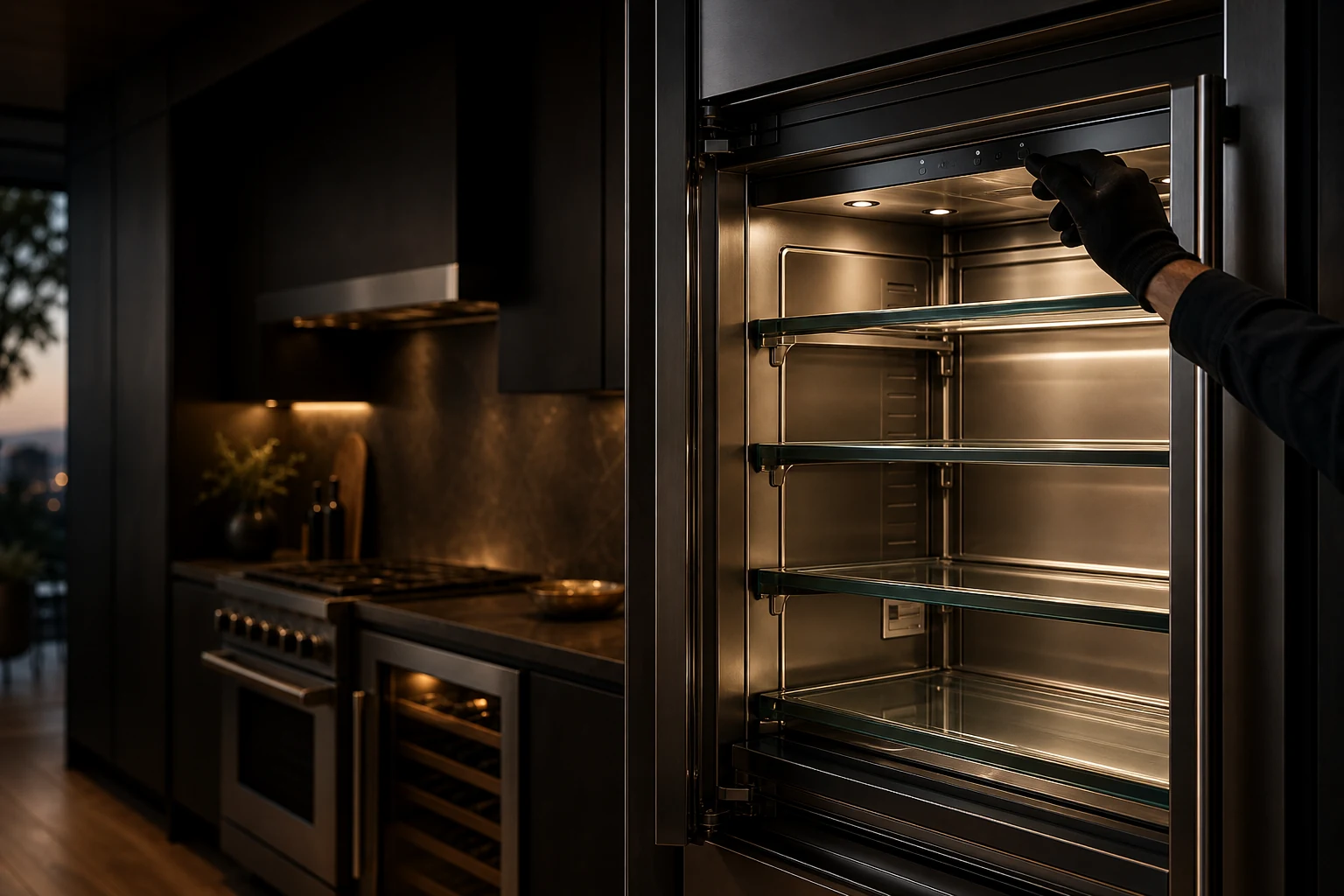
Sub-Zero Freezer Repair
Built-in and column freezers and freezer drawers — running warm, frosting over, not freezing or icing up. Same-day across the East Bay, 24/7, warrantied.
 By Marcus Reed · Lead Sub-Zero Technician · 20+ yrs · Oakland & East Bay
 Sub-Zero freezer running warm in Oakland? It's usually a failing evaporator fan, frost smothering the coil, a defrost-system fault, or a drawer that isn't sealing — and sometimes a sealed-system issue. You can safely vacuum the condenser and check the gasket; defrost, fan and sealed-system work needs a technician. We repair built-in and column Sub-Zero freezers and freezer drawers same-day across Oakland & the East Bay — call (650) 668-1554.
When a Sub-Zero freezer column or drawer won't hold temperature, the most common causes are a worn evaporator fan that can't move cold air, frost covering the evaporator coil, or an incomplete defrost cycle. On dual-evaporator built-ins the freezer has its own sealed circuit and controls, so the fresh-food side can stay perfectly cold while the freezer slowly drifts up to 10, 20 or 30 degrees. We measure airflow and coil temperature before we touch a single part, so you only pay to fix the actual fault.
A genuine Sub-Zero freezer should hold right around 0°F. If yours is reading in the teens or twenties, watch how it behaves over a few hours before you call: a unit that pulls down overnight and then climbs through the day points one direction (defrost or airflow), while one that never gets cold and runs nonstop points another (sealed system or compressor). Note whether the evaporator fan is audible, whether the back wall is iced solid, and whether the compartment recovers after you keep the door shut. Those three observations let us walk in already narrowing the cause instead of starting from scratch.
Understanding the path of the cold air explains nearly every symptom. The compressor pumps refrigerant through the freezer evaporator, the evaporator fan blows air across that cold coil, and an automatic defrost cycle periodically melts the thin layer of frost that builds on it. A damper and the controls meter how much of that cold air, on some designs, crosses to the fresh-food side. Each of those parts can fail independently — which is exactly why a freezer can run warm while the refrigerator stays fine, or frost up heavily while the compressor sounds perfectly healthy. Our job on the first visit is to follow that chain with a meter and a thermometer and find the one broken link, rather than swapping parts on a hunch.
Frost that keeps returning is the classic sign of a defrost problem — a burned-out defrost heater, a failed defrost thermostat, or a control board that isn't triggering the cycle. It can also come from warm, humid Oakland air leaking past a tired door or drawer gasket. We test the defrost circuit electrically and check the seal under load, then restore the defrost system so you're not chiseling ice out every few weeks.
One detail we always check: where the frost lives. Frost concentrated on the back evaporator panel is a defrost-circuit story. Frost on the gasket line, on the ceiling near the opening, or on the first item just inside the door is an air-leak story — usually a seal or alignment problem. Frost only around the ice maker or chute often means a stuck or leaking ice-maker fill. Reading the pattern keeps us from replacing a perfectly good defrost heater when the real culprit is a $40 gasket, and vice versa.
Sub-Zero freezer drawers and doors seal with a magnetic gasket, and that seal does a lot of work. When the gasket is torn, hardened, compressed flat or pulled out of its channel — or when the drawer glides are out of alignment — warm air pours in, the unit runs constantly, and frost forms on the walls. We replace the gasket with a genuine OEM part, re-seat it correctly, and re-align the drawer so it closes square and stays tight.
A quick test you can do before we arrive: close a dollar bill in the door so half is inside and half out, then tug it. If it slides free with almost no drag, that section of gasket has lost its grip. Do it at the top, the corners and the bottom — gaskets usually fail at the corners and along the hinge side first. On undercounter freezer drawers, also check that the basket and glides return fully home; a single jammed glide can hold the drawer open a few millimeters, which is all the warm air needs.
The automatic defrost system is what keeps the evaporator clear so cold air can circulate. When the heater, thermostat or control fails, frost slowly chokes the coil until the freezer can no longer keep up — even though the compressor and fan may be running fine. Because the symptoms mimic a sealed-system problem, we verify the defrost components with a meter before recommending anything, following manufacturer service specifications.
A light, even frost can be normal, but a thick layer of snow or solid ice on the back wall of the freezer almost always means trouble: a defrost fault, an air leak from a failed gasket, or warm air sneaking in through a stuck damper from the fresh-food side. We trace the source instead of assuming it's humidity, so the fix actually holds. Seeing a fault code on the panel? See our Sub-Zero error-code guide, and on newer boards you can often surface stored data through the unit's service mode readouts we use on every visit.
If the freezer is completely warm and the compressor is silent or short-cycling, the issue may be in the sealed system — compressor, evaporator, or a refrigerant leak. These faults need electrical and pressure evidence first, so we confirm with gauges and instruments rather than guessing. On big-ticket sealed-system work we give an honest repair-vs-replace assessment, since most built-ins are engineered for 20+ years and are usually worth saving.
Each Sub-Zero platform fails in its own ways, and knowing the platform shortens the visit. On BI-series side-by-side and bottom-freezer built-ins, the freezer evaporator fan and the magnetic gasket are the usual warm-freezer suspects, and the lower grille condenser collects a surprising amount of Oakland dust. The older 600- and 700-series classics are mechanically robust but old enough that defrost heaters, thermostats and original gaskets are simply aging out — a tune-up of those parts often gives them another decade. The integrated and Designer freezer columns (the standalone IC-/IT-style freezer) lean heavily on a single dedicated evaporator and electronic controls, so a fan or board fault hits the whole compartment at once. PRO 48 and PRO 84 units run hard in serious kitchens and reward consistent condenser cleaning. And undercounter freezer drawers live or die by gasket condition and drawer alignment, since their seal is doing the same job in a smaller, lower box. Have your model and serial from the plate inside the door when you call and we'll show up with the right specs and parts.
We're a Sub-Zero shop first, but many East Bay kitchens pair a Sub-Zero column with a Wolf or Viking suite, and the freezer drawers and undercounter units from those brands share the same failure logic — gasket, fan, defrost, controls. If your freezer is actually part of a Viking or Wolf package, our Wolf repair and Viking troubleshooting pages cover those, and we bring the same independent, OEM-parts approach to all of them.
A typical Oakland freezer call runs like this: we confirm the symptom and read the model and serial, pull the unit forward if it's a built-in to reach the condenser and back panel, and take live temperature and electrical measurements. We check the evaporator fan, the defrost heater and thermostat continuity, the gasket seal, the thermistors and the control board inputs — then walk you through exactly what we found. You get a clear, flat price before any repair begins, and because we stock the common freezer parts on the van, a large share of jobs finish in that first visit. If a model-specific part has to be ordered, we tell you the timeline up front and schedule the return promptly. A warm freezer can spoil hundreds of dollars of food fast, so if it can't wait, see our 24/7 emergency Sub-Zero repair.
Local conditions matter more than people expect. Up in the Oakland hills, Montclair and Claremont, fine dry-season dust and pet hair pack into the lower condenser and make the whole system work harder — which shows up first as a freezer that can't quite hold zero on warm afternoons. The East Bay's hard water leaves scale in ice makers and water lines, gumming up fill valves and causing the ice-maker frost we mentioned above. And in the converted lofts and warehouse kitchens around Jack London Square and West Oakland, open floor plans and big south-facing windows raise ambient kitchen temperature, so a unit with a weak fan or a marginal gasket tips over the edge faster. None of this means a defect — it means these machines need a little upkeep to thrive here.
You can prevent a lot of freezer calls with two habits. First, vacuum and brush the condenser at the lower grille every six months — quarterly if you have pets or live in a dusty hill neighborhood — because a clogged condenser is the single most common cause of a freezer that slowly loses its edge. Second, keep the gasket clean and supple: wipe it with warm soapy water, dry it, and check the seal with the dollar-bill test each season so a small leak never becomes a frosted-over compartment. Avoid jamming the freezer so full that air can't circulate around the evaporator outlet, and let the defrost cycle do its job rather than packing items against the back wall. Our Sub-Zero maintenance guide walks through the full routine.
We're an independent Sub-Zero specialist — not a manufacturer-authorized service center. We use genuine OEM parts, our work follows manufacturer service specifications, and we never claim a certification we don't hold. The diagnostic starts at $89 and is applied to your repair, you approve a clear price before any work begins, and every repair carries a 365-day warranty on parts and labor on parts and labor. Want the numbers before you book? See our Sub-Zero repair cost guide. Freezer and fridge symptoms often overlap on built-ins — if the fresh-food side is also acting up, start with our Sub-Zero refrigerator repair page.
Reviews
“Sub-Zero ice maker stopped producing. Quick diagnosis of the fill valve and module, replaced both, and showed me how to confirm it was cycling before they left. Easy to reach on the 24/7 line.”
Will P.Oakland · Sub-Zero · ice maker
“Garage Sub-Zero freezer in the hills quit in a heat wave. They came out the same evening, found the condenser caked with dust plus a tired fan, and saved a freezer full of food. Worth every penny.”
Eric L.Oakland Hills · Sub-Zero · freezer
“Viking fridge wasn't holding temp. Honest assessment — they told me which part was worth replacing and which wasn't, instead of upselling. Came back promptly with the part and it's been fine since.”
Tomás V.Oakland · Viking · refrigerator
“Estate kitchen near Claremont with a panel-ready Sub-Zero that iced up repeatedly. They fixed the defrost system and walked me through condenser cleaning so it won't keep happening. Respectful of the house, clear pricing up front.”
Karen S.Claremont · Sub-Zero · built-in refrigerator
“Second time using them for our Piedmont Sub-Zero. Same tech remembered the unit, fixed the new issue fast, and stands behind the work. The 365-day warranty gave real peace of mind.”
Rebecca D.Piedmont · Sub-Zero · refrigerator
“Our dual-zone Sub-Zero wine unit drifted warm on the lower zone — scary with a full cellar. They diagnosed a failing fan and a dirty condenser, fixed it same day, and the temperatures have been rock-steady since. Saved the collection.”
Greg H.Berkeley · Sub-Zero · wine cooler
FAQ
On dual-evaporator built-ins the freezer has its own evaporator, fan and defrost circuit. A worn evaporator fan, frost smothering the coil, a failed defrost heater or a control fault will let the freezer drift warm while the fresh-food side stays cold. We isolate which one it is before replacing any part.
The diagnostic starts at $89 and is applied to the repair. Common parts — evaporator fans, defrost heaters, thermistors, gaskets and control boards — typically run a few hundred dollars; sealed-system work is higher. You approve a clear price first, and every repair carries a 365-day warranty on parts and labor.
Recurring frost almost always points to the defrost system — a failed defrost heater, defrost thermostat or control board — or a door/drawer that isn't sealing. We test the defrost circuit and the gasket seal so the frost stops coming back, instead of just scraping it out.
Yes. Sub-Zero freezer drawers rely on a magnetic gasket and correct drawer alignment. A torn, hardened or distorted gasket — or a rack/glide that's out of true — breaks the seal and lets warm, humid air in. We replace the gasket with a genuine OEM part and re-align the drawer.
A light, even coating can be normal, but heavy snow or solid ice on the back wall usually means a defrost fault, an air leak from a bad seal, or warm air entering from a stuck damper. We find the source rather than assuming it's just humidity.
We stock the common freezer parts — evaporator fans, defrost heaters, thermistors, gaskets and relays — and order model-specific components fast. Tell us your model and serial when you call so we arrive prepared.
A full freezer holds safe temperature about 48 hours if you keep the door shut; a half-full one closer to 24. The ice-cream test is a quick gauge — if it's soft but still cold, you likely have a slow drift you can ride out a day; if everything is thawing and refreezing, treat it as urgent so you don't lose the load.
We cover built-in BI-series side-by-side and bottom-freezer units, 600- and 700-series classics, the integrated and Designer columns (the standalone freezer column being the IC-/IT-style), undercounter freezer drawers, and PRO 48/PRO 84 units. Tell us the model number on the plate inside the door and we'll arrive with the right parts and specs.
Sub-Zero built-ins are engineered for 20-plus years, so most are worth repairing — a fan, gasket, heater or board restores them at a fraction of replacement cost. We'll only steer you toward replacement when a sealed-system failure on a very old, scratched-in cabinet makes the math stop working, and we'll tell you that plainly.
Explore more
Tell us your model and the symptom — we'll give you a clear price and book a same-day visit when the schedule allows.